Why Tennis Ball Machines Need Pressureless Balls
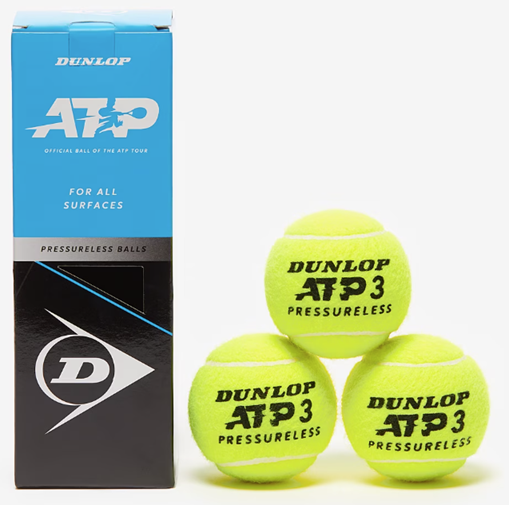
If you've ever used a tennis ball machine, you might have noticed the balls feel different from the ones used in regular play. That's because ball machines should use pressureless tennis balls—and for very good reasons. Understanding the difference between pressureless and pressurized balls is key to getting the most out of your machine practice sessions.
The Difference: Pressurized vs. Pressureless Balls
Pressurized Tennis Balls (Standard Match Balls)
The tennis balls you typically use when playing with friends or in matches are pressurized balls. These balls are filled with compressed air inside a rubber core, sealed under high pressure within a pressurized can.
Characteristics:
- Lively bounce: The internal pressure gives them a responsive, springy feel
- Lighter feel: Easier to control and generate spin
- Short lifespan: Lose pressure within 2-4 weeks after opening, even without use
- Performance degradation: Become "dead" or flat as air escapes through the rubber
- Best for: Match play, competitive games, and recreational hitting sessions
Pressureless Tennis Balls (Machine Balls)
Pressureless balls have no internal air pressure. Instead, they rely on a thicker rubber core to generate bounce. They don't require pressurized canisters and can be stored in regular containers.
Characteristics:
- Firm feel: Heavier and slightly harder than pressurized balls
- Consistent bounce: Maintain the same performance throughout their lifespan
- Long lifespan: Last for months or even years depending on usage
- No pressure loss: Don't go "flat" like pressurized balls
- Best for: Ball machines, training drills, practice baskets
Why Ball Machines Require Pressureless Balls
1. Longevity and Cost-Effectiveness
Tennis ball machines fire hundreds—sometimes thousands—of balls per session. Using pressurized balls would be incredibly expensive and wasteful.
- Pressurized balls: Degrade after just 2-3 machine sessions. A hopper of 72 balls would need replacing weekly at $30-50 per can set
- Pressureless balls: Last 6-12 months of regular use. Your initial investment pays off over hundreds of practice hours
- Cost comparison: Pressureless balls cost more upfront ($50-80 per hopper) but save hundreds of dollars annually
2. Unwavering Consistency
The entire purpose of a ball machine is to provide predictable, repeatable shots for training. Pressureless balls maintain identical bounce characteristics from the first ball to the thousandth.
- Speed consistency: Every ball exits the machine at the same velocity
- Bounce consistency: The first ball and the last ball bounce identically
- Spin consistency: Topspin and slice settings produce uniform results
- Training benefit: You can focus purely on technique without adjusting for ball variation
With pressurized balls, performance degrades throughout a session. The first 10 balls bounce higher than the last 10, forcing you to adapt constantly—defeating the purpose of machine practice.
3. No Pressure Loss Between Sessions
Pressurized balls start losing air the moment you open the can. Even if stored properly between sessions, they'll be significantly flatter after a week.
- Pressureless advantage: Store them in the machine hopper or a bucket without worrying about degradation
- Convenience: Always ready for practice—no need to buy fresh balls before each session
- Reliability: Perform the same whether it's been 1 day or 1 month since your last session
4. Better Machine Performance
Ball machines are engineered with pressureless balls in mind. The consistent weight and density optimize:
- Shot accuracy: Machines can precisely control trajectory with uniform ball weight
- Wheel wear: Consistent ball hardness reduces irregular wear on machine wheels
- Feed reliability: Pressureless balls don't get stuck in hoppers or feed mechanisms
- Speed calibration: Machine settings remain accurate throughout the session
5. Environmental Benefits
The tennis industry generates massive waste from discarded pressurized balls. Pressureless balls significantly reduce environmental impact:
- Less waste: One set lasts as long as 20-30 sets of pressurized balls
- No pressurized cans: Eliminates metal and plastic canister waste
- Longer lifecycle: Fewer balls manufactured = reduced carbon footprint
- Recyclable: Can be repurposed for dog toys, chair leg protectors, or garden projects when finally worn
Common Misconceptions About Pressureless Balls
Myth 1: "They Feel Too Heavy"
Reality: Pressureless balls are slightly heavier, but this actually strengthens technique. Hitting them requires proper form and follow-through, building muscle memory that translates to better power and control with regular balls.
Myth 2: "They Don't Bounce High Enough"
Reality: Pressureless balls meet ITF (International Tennis Federation) standards for bounce height. They bounce differently—more consistently—but not lower than fresh pressurized balls. Adjust machine elevation if needed.
Myth 3: "They're Not Good for Learning"
Reality: Pressureless balls are excellent training tools. The added weight encourages full swings, proper weight transfer, and aggressive footwork—all essential for skill development.
When to Replace Pressureless Balls
Even pressureless balls eventually wear out. Look for these signs:
- Felt damage: Excessive fuzz loss, bald patches, or tears
- Weight change: Balls feel significantly lighter (rubber core is breaking down)
- Inconsistent bounce: Some balls bounce noticeably higher or lower than others
- Cracking sounds: Audible cracking when hitting indicates core degradation
With proper use, this typically occurs after 6-18 months depending on frequency and intensity of practice.
Best Practices for Using Pressureless Balls
- Store properly: Keep in a cool, dry place away from direct sunlight to prevent rubber degradation
- Rotate balls: If you have multiple hoppers, alternate usage to equalize wear
- Clean occasionally: Wipe with a damp cloth to remove dirt and extend felt life
- Mix old and new sparingly: If adding new balls, do so gradually to maintain consistency
- Warm them up: In cold weather, pressureless balls may feel harder—let them acclimate to room temperature
Conclusion
Pressureless tennis balls are not just a cost-saving measure—they're the optimal choice for ball machine practice. Their longevity, unwavering consistency, and machine compatibility make them indispensable for serious training. While they feel different from the pressurized balls used in matches, this difference is a feature, not a flaw, forcing you to develop proper technique and strength.
When you rent a ball machine from us, it comes stocked with premium pressureless balls that deliver the same reliable performance in your first session as they will in your fiftieth. Focus on your game, not on ball quality.
Experience Consistent Practice with Quality Pressureless Balls
All our rentals include premium pressureless balls for optimal training