5 Common Forehand Mistakes and How to Fix Them with a Tennis Ball Machine
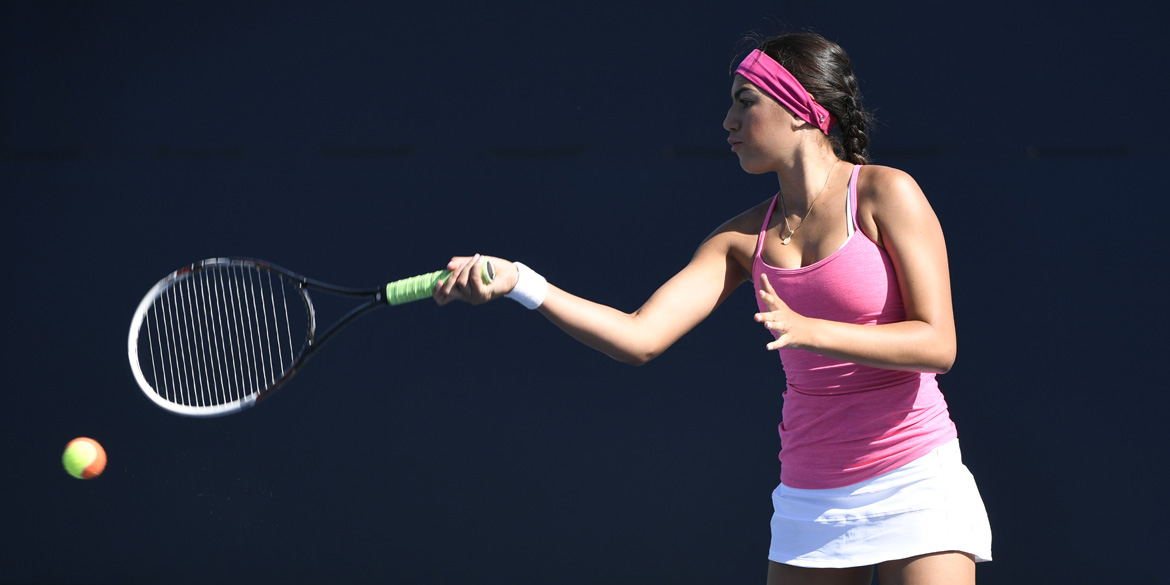
The forehand is the most frequently used shot in tennis, yet it's also where most recreational players carry the most ingrained bad habits. The problem is that repeating mistakes at high volume — without deliberate correction — only reinforces those errors deeper into muscle memory. A tennis ball machine changes this completely: it removes the variables of a live opponent and gives you the controlled repetitions needed to isolate, target, and fix each flaw one at a time.
Here are the five most common forehand mistakes and the exact ball machine settings to correct them.
Mistake 1: Late Preparation and Slow Racket Takeback
Late preparation is the root cause of most forehand errors. When your racket isn't back early enough, you're forced to rush the swing, leading to weak contact, loss of control, and inconsistent direction. Many players wait until the ball is almost on them before starting their backswing — by then it's already too late.
The fix starts with the split step — a small hop timed to your opponent's (or the machine's) ball release — followed immediately by shoulder rotation and racket takeback.
Fix Drill: Early Takeback Groove
Settings: Speed 20–30%, no spin, oscillation OFF, slow feed (4–5 sec)
Focus: As the ball is launched, immediately split step and turn your shoulders. Racket must be fully back before the ball crosses the net.
Goal: 30 consecutive forehands with a fully completed takeback before the ball bounces. Slow the machine down further if needed — there is no benefit in rushing through this drill.
Mistake 2: Hitting with the Arm Only (No Hip or Shoulder Rotation)
An arm-only forehand is low-powered and prone to injury. Power in a proper forehand comes from a kinetic chain that begins with the legs, drives through the hips, and transfers through the shoulder and arm into the ball. Players who skip this rotation produce a flat, weak shot that breaks down under pressure.
This is one of the hardest habits to fix with a live partner because the pressure of a real rally causes you to revert to your default. With a machine, every ball arrives identically, so you can slow down and focus entirely on body mechanics.
Fix Drill: Hip Drive Isolation
Settings: Speed 40–50%, light topspin, oscillation OFF, medium feed (3 sec)
Focus: Set up in your ready position with hips and shoulders sideways to the net. On each ball, consciously drive your front hip forward and through the shot before your arm extends. Feel the rotation, not the arm swing.
Goal: 20 forehands where you can feel your belt buckle rotate toward the net as you make contact. Place a cone or bag on the other side of the net as a target — rotation drives direction.
Mistake 3: Inconsistent Contact Point
Ideally, forehand contact should occur slightly in front of your body, at roughly waist height, with your arm comfortably extended. Hitting too close to your body cramps the swing; hitting too far out causes you to reach with a weak, open wrist. Both produce wild directional errors.
Because a ball machine delivers every ball to the same spot at the same height, it's the perfect tool for grooving a consistent contact point — something impossible to replicate in regular rallies.
Fix Drill: Contact Zone Groove
Settings: Speed 35–45%, no spin, oscillation OFF, slow feed (4 sec)
Focus: Stand in the same spot for every ball. Don't move your feet — let the machine's ball come directly to you. Your only job is to find the perfect contact point: in front, at waist height, arm extended but not reaching. Use a consistent target across the net.
Goal: 40 forehands to the same target zone. If you notice the ball going consistently left or right, adjust your contact point slightly rather than changing your swing direction.
Mistake 4: Poor Follow-Through and Short Swing
A short, jabbing swing that stops after contact produces inconsistent depth and no topspin. The follow-through isn't cosmetic — it directly controls where the ball goes and how much net clearance you generate. A proper modern forehand finishes with the racket wrapping over the opposite shoulder in a windshield-wiper motion.
Players who shorten their swing are often subconsciously trying to "control" the ball, but a complete follow-through is what actually produces reliable, penetrating topspin.
Fix Drill: Exaggerated Windshield-Wiper Finish
Settings: Speed 30–40%, light topspin, oscillation OFF, slow feed (4–5 sec)
Focus: After every single shot, freeze your finish position and check it. Your racket should be above your left shoulder (right-handed player), strings facing down, elbow relaxed. Hold the finish for a full second before resetting. Exaggerate it until it feels excessive — it probably isn't.
Goal: 25 forehands where you consciously hold the windshield-wiper finish for one second after each shot. Notice how balls start carrying deeper with more topspin as your swing path lengthens.
Mistake 5: Tensing Up as Speed Increases
Many players hit beautifully in slow drills but fall apart at match pace. The culprit is tension — gripping too hard, tightening the shoulder, bracing through the swing. This tension kills racket head speed and destroys feel. It's the reason players say "I can do it in practice but not in matches."
A machine is uniquely suited to solve this because you can gradually raise the speed in a controlled, non-threatening environment — training your body to stay relaxed as the pace climbs.
Fix Drill: Progressive Speed Ramp
Settings: Start at 30% speed, topspin, oscillation OFF, medium feed. Increase speed by 10% every 10 balls.
Focus: At each speed level, actively check your grip pressure (should be a 4–5 out of 10), relax your shoulder before each swing, and breathe out on contact. If you tense up at a given speed, drop back down one level and rebuild.
Goal: Work smoothly from 30% up to 70% speed without a change in swing mechanics or grip tension. Most players find their "tension trigger point" around 50–60% — that's exactly the range to train repeatedly.
Quick Reference: All 5 Drills at a Glance
| Mistake | Speed | Spin | Oscillation | Feed |
|---|---|---|---|---|
| Late takeback | 20–30% | None | OFF | Slow (4–5 s) |
| No hip rotation | 40–50% | Light top | OFF | Medium (3 s) |
| Contact point | 35–45% | None | OFF | Slow (4 s) |
| Short swing | 30–40% | Light top | OFF | Slow (4–5 s) |
| Tension under pace | 30–70% | Topspin | OFF | Medium (3 s) |
Why These Drills Work Better with a Machine
Every drill above relies on one thing: a consistent, repeatable ball feed. With a human partner or a coach, ball quality varies — pace, height, placement all fluctuate, forcing your body to adapt rather than groove. With a machine, you can isolate a single variable and repeat it hundreds of times until the correct movement pattern becomes automatic.
- No scheduling required: Book a court whenever you're available and work at your own pace
- No social pressure: Fix ugly technique habits without self-consciousness
- Unlimited repetitions: A machine never tires and never serves you a bad ball
- Progressive overload: Dial up speed, spin, or oscillation only when you're ready
Start Fixing Your Forehand Today
These five drills can realistically be worked through in a single 60-minute session — one mistake per 10-minute block. Pick the one that resonates most with your current game and make it the focus of your next session. After two or three dedicated machine sessions, you'll notice structural changes that carry over into match play.
Ready to get started? Contact us to book a tennis ball machine rental and bring these drills to life on your next court session.
Build a Complete Training Session
Pair forehand correction with setup fundamentals and machine settings for faster improvement.
Fix Your Forehand with Solo Machine Practice
Rent a premium tennis ball machine — book a court-side smart locker up to 14 days ahead, or unlock one instantly