Tennis Training in Singapore Heat, Humidity and Rain
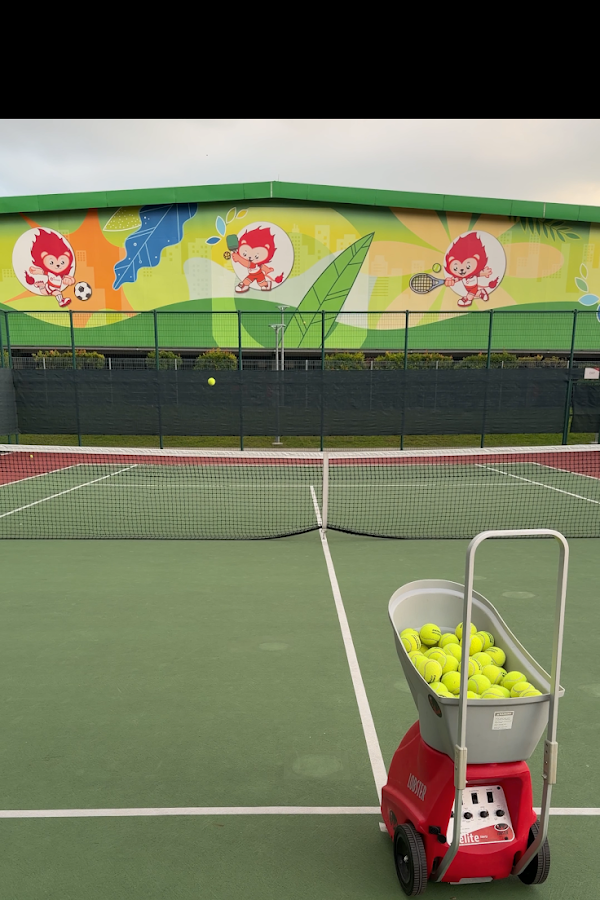
Singapore sits about one degree north of the equator, which gives it something most tennis countries do not have: courts that are playable 52 weeks a year, and weather that will punish you for ignoring it. Daytime highs sit around 31–33°C for most of the year, relative humidity is frequently above 70%, and a clear morning can turn into a thunderstorm by 3pm with very little warning.
The players who improve here are not the ones who train hardest. They are the ones who schedule well, keep sessions short and dense, and have a plan for rain that does not involve abandoning the week. This guide covers all three, with specific advice for ball machine practice. If you are still choosing where to train, pair it with our roundup of the best tennis courts in Singapore for ball machine practice.
Quick answer
The best time to play tennis in Singapore is 7am–9.30am, when the air is coolest and afternoon storms have not formed. Keep sessions to 60–90 minutes of structured work with planned rest, drink before you are thirsty, and never run a ball machine on a wet court. Book morning slots year-round — it is a more reliable strategy than trying to forecast around the Northeast (December–March) and Southwest (June–September) monsoons.
Choosing Your Training Window
Time of day matters more in Singapore than season does. The temperature range across the year is small; the range across a single day is what you can actually work with.
| Window | Conditions | Best for |
|---|---|---|
| 7.00–9.30am | Coolest air, low sun, storms not yet formed | Full sessions, footwork and conditioning work |
| 9.30am–12pm | Warming quickly, sun overhead | Shorter technical blocks, more shade breaks |
| 12–4pm | Peak heat and UV, highest storm risk | Avoid if you have any alternative |
| 4–6.30pm | Cooling, but storms often arrive here | Sessions you are willing to cut short |
| After 6.30pm | Comfortable, needs court lighting | Technical drills at floodlit venues |
Because our smart lockers are self-service and available 24/7, the morning window is genuinely usable — there is no staff handover to arrange, no delivery to schedule, and no minimum notice beyond your booking. You can reserve a slot up to 14 days ahead at our booking app, and the unlock button activates 30 minutes before the slot starts.
Why Humidity, Not Heat, Is the Real Problem
Your body cools itself by evaporating sweat. When the air is already close to saturated, that evaporation slows down, so the same 32°C feels dramatically harder in Singapore than it does in a dry climate. Two things follow from this, and they are the two things visiting players get wrong:
- You will not "sweat it out." Sweat that drips instead of evaporating cools you very little while still costing you fluid. Dripping is not progress.
- Your session quality falls before your legs do. Concentration and shot precision degrade earlier than raw endurance, which is why long sessions here produce so many low-quality repetitions.
The practical response is to design sessions around density rather than duration. Short blocks with real rest between them will always beat continuous hitting in this climate.
How to Structure a Session in the Heat
A ball machine is unusually well suited to hot-weather training, because it makes rest free. A hitting partner standing around gets cold and bored; a machine simply sits there switched off. That lets you take genuine recovery between blocks without wasting anyone's court time.
A 60-minute hot-weather template
Ten minutes easy warm-up. Then four blocks of eight minutes each — one footwork block, two stroke blocks, one net or return block — with a full three minutes of shade and fluid between every block. Finish with five minutes of easy hitting to cool down. You will hit fewer balls than in a continuous session and far more of them well.
- Drink before you are thirsty. Thirst lags behind fluid loss, so a fixed schedule beats waiting for the signal.
- Bring more water than feels necessary. Outdoor court taps are not guaranteed.
- Use the shade deliberately. Standing in the sun during rest largely cancels the rest.
- Bring a second shirt and a spare grip. A soaked grip is a genuine injury risk, not a comfort issue.
- Stop early if you feel dizzy, stop sweating, or get a headache. These are not signs to push through, in any climate.
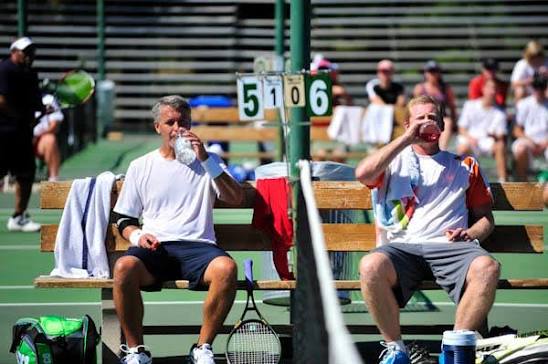
Front-load the technical work. The footwork drills and precision blocks should happen while you are fresh, with the more forgiving rally work at the end.
Planning Around the Monsoons
Singapore's rain comes in two distinct patterns, and knowing which one you are in changes how you plan a training week:
- Northeast Monsoon (roughly December to early March): longer, more widespread rain that can settle in for hours. Whole days are occasionally written off. Book flexibly and accept some lost sessions.
- Southwest Monsoon (roughly June to September): sharp early-morning squalls that pass quickly. A 7am storm often clears by 9am, so a later morning slot can be safer than a very early one.
- Inter-monsoon months: classic late-afternoon thunderstorms. Morning play is strongly favoured.
Our booking terms allow free rescheduling or a full refund up to 24 hours before your slot. That is useful for planned changes but will not help with a storm that appears three hours out — which is exactly why the morning-slot habit is worth more than any cancellation policy. If a session does get rained out, the honest answer is to move that week's work rather than cram it: our 4-week training plan is built to absorb a missed session without losing the progression.
Equipment Care in a Tropical Climate
Heat and humidity are hard on gear as well as players. A few habits go a long way:
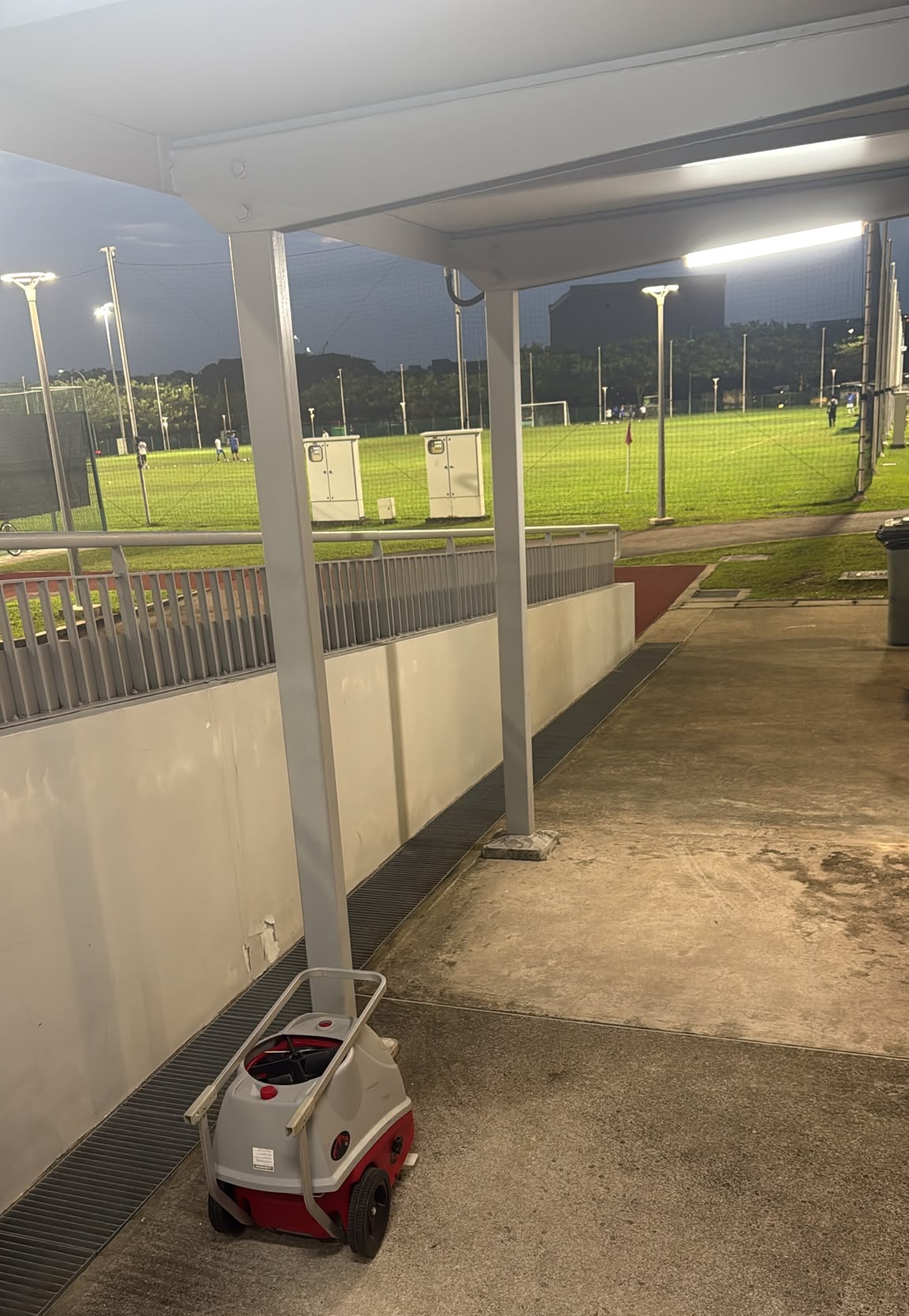
- Never operate the machine in rain or on a wet court. It is electrical equipment. If rain starts, stop, cover it, and move it under shelter.
- Keep the machine out of direct midday sun between blocks where the court layout allows it.
- Dry the balls before packing up. Pressureless balls tolerate a lot, but damp balls stored in a closed hopper get grubby fast. Our explainer on why ball machines need pressureless balls covers why these balls hold up better than pressurised ones here.
- Change overgrips often. They degrade far quicker in this humidity than the manufacturer's guidance assumes.
Train Around the Weather, Not Against It
Singapore's climate is a real constraint, but it is a predictable one, and predictable constraints can be scheduled around. Book mornings, keep sessions to 60–90 minutes, plan real rest, and let a machine do the feeding so that rest costs you nothing. Players who adopt that pattern train more consistently across a year than players in far gentler climates who are waiting for winter to end. See rental pricing for hourly and daily rates, or the full machine features if you are planning your first session.
Frequently Asked Questions
What is the best time of day to play tennis in Singapore?
Early morning, roughly 7am to 9.30am, is the most comfortable window on most days: the air is cooler, the sun is low, and afternoon convective storms have not developed yet. The second-best window is after about 6pm, though outdoor courts without lighting close early. Midday between 12pm and 4pm is the hardest time to train outdoors in Singapore and the period when heat stress builds fastest.
How long should a tennis session be in Singapore's humidity?
Sixty to ninety minutes of structured work is usually enough. High humidity slows sweat evaporation, so your body clears heat less efficiently than it would in a dry climate at the same temperature, and quality drops sooner. A focused 60-minute ball machine session with planned rest between drill blocks produces more useful repetitions than a two-hour session where the last 40 minutes are spent tired and sloppy.
Can you use a tennis ball machine in the rain?
No. Ball machines are electrical equipment and should not be operated in rain or on a wet court, and wet pressureless balls become heavy and unpredictable. If rain starts mid-session, stop, cover the machine, and move it under shelter. Singapore rain is typically short and intense, so it is often worth waiting 20-30 minutes rather than abandoning the session.
When is Singapore's rainy season for tennis planning?
Singapore has two monsoon periods. The Northeast Monsoon runs from around December to early March and brings longer, more widespread rain, sometimes lasting most of a day. The Southwest Monsoon runs from around June to September and brings shorter, sharper morning squalls. Between them are inter-monsoon months with frequent late-afternoon thunderstorms. Morning bookings are the safest choice in every season.
What happens to a Tennis Machine SG booking if it rains?
Bookings can be rescheduled free of charge, or cancelled for a full refund, up to 24 hours before the slot starts. Because Singapore weather is hard to forecast a full day ahead, the practical approach is to book early-morning slots, which are less likely to be disrupted, rather than relying on last-minute changes.
Related Reading
Book a Morning Slot This Week
Our smart lockers are self-service and open 24/7 — reserve the cool early window before it goes.