From Ball Machine to Match Play: How to Make Practice Transfer
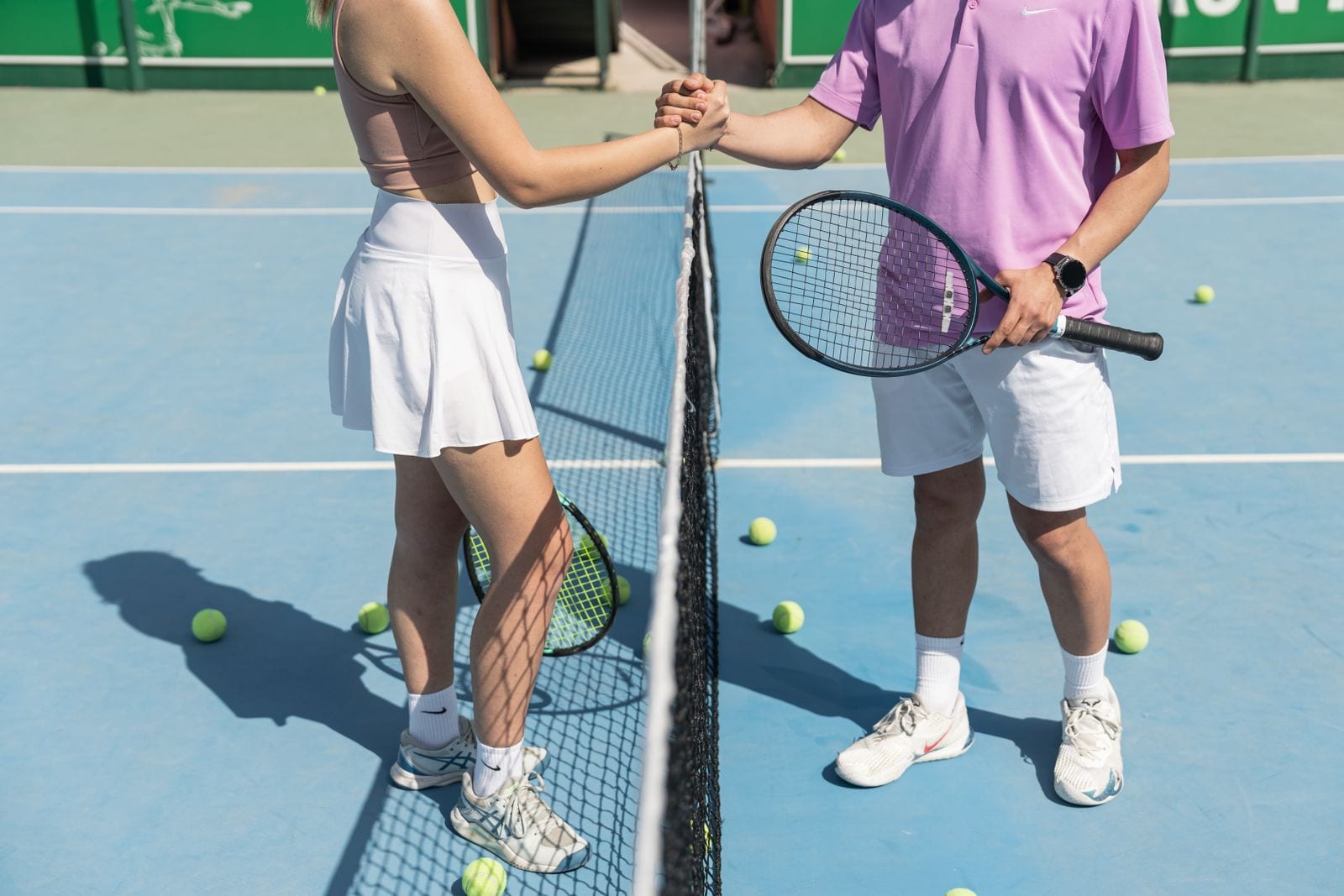
Every club has the player who looks superb in practice and ordinary in a match. The forehand that flowed for forty balls in a row against the machine tightens up at 30–all, and the conclusion people draw is that machine practice does not transfer. It is half right. Machine practice that consists of the same ball, from the same spot, at the same pace, for an hour does transfer poorly. That is a problem with how the session is designed, not with the machine.
This guide explains why repetition alone falls short, then gives you a four-stage ladder for turning machine sessions into match-ready strokes, the scoring games that add pressure, what a machine genuinely cannot train, and how to use it in the week before a match. It builds on our comparison of ball machine practice and private lessons, which covers where each one fits in a training week.
Quick answer
Ball machine practice transfers to match play when a session moves from blocked practice (the same ball repeated) to random practice (varied balls that force a decision) before you test it in live points. Spend roughly the first third of a session grooving a stroke on a fixed feed, the middle third with oscillation and spin changes, and the last third on scored drills where every ball needs a choice. A machine cannot read an opponent or disguise a shot, so pair it with at least one live session a week. Tennis Machine SG machines offer adjustable speed (15–110 km/h), spin, feed rate and random oscillation for exactly this progression.
Why Machine Practice Sometimes Fails to Transfer
Machine practice fails to transfer when every ball is the same, because a match never gives you the same ball twice. Two terms from motor learning explain the gap:
- Blocked practice is repeating one skill under identical conditions — fifty cross-court forehands from an unchanging feed. It produces fast improvement within the session and feels productive.
- Random practice is mixing skills and conditions so that no two consecutive balls are the same — forehand or backhand, deep or short, cross-court or down the line, decided ball by ball.
Research on the contextual interference effect has found the same pattern many times: blocked practice looks better during the session, while random practice produces better retention and better transfer to new situations. The reason is that random practice makes you re-plan the movement for every ball, which is exactly what a match demands. Blocked practice lets you run the same plan on autopilot. A typical machine session is almost entirely blocked, and that is the whole problem. Three things are usually missing:
- Variability: the ball changes in direction, height, depth or spin.
- Decisions: you choose what to do with each ball rather than repeating a pre-set shot.
- Consequence: a miss costs you something, so there is something at stake.
The Transfer Ladder: Four Stages in Every Session
Structure each session as a ladder that moves from blocked to random, climbing one rung at a time. Blocked practice is not the enemy — it is the right tool for grooving a stroke — but it should be the bottom rung, not the whole session.
| Stage | Machine settings | What you practise | Move up when |
|---|---|---|---|
| 1. Groove | Oscillation off, 5–6 second feed, fixed speed and spin | One stroke, one target. Contact point and swing shape. | 8 of 10 land in the target zone |
| 2. Vary | Oscillation on; change speed, spin or height every block | The same stroke against a ball that keeps changing | Your success rate holds within a ball or two of stage 1 |
| 3. Decide | Random oscillation, 4–5 second feed | Choosing the shot based on the ball, using a decision rule | You make the right choice on at least 8 of 10 balls |
| 4. Compete | Random oscillation, 3–5 second feed, match pace | Scored games where a miss costs points | You beat last session's score — then take it to live points |
In a one-hour session, a practical split is about 15 minutes on stage 1, 15 on stage 2 and 20–25 across stages 3 and 4, with rest in between. Machines with programmable drill modes can also run a repeating pattern of target points you set on a grid, which is a useful bridge between stages 2 and 3 — our machine guide shows how to set them up. Every machine we rent has random horizontal oscillation, which is all stages 3 and 4 need.
Build a Decision Into Every Ball
A decision rule turns a random feed into a match situation. Before the block starts, decide what cue triggers which shot, then obey it on every ball. Three rules that work well on your own:
- The position rule. If you hit the ball from behind the baseline, play it high and deep cross-court. If you hit it from inside the baseline, attack down the line. This is the core of most singles tactics, and our singles patterns guide builds four full patterns on it.
- The height rule. A ball above shoulder height is neutralised cross-court; a ball at waist height is driven. Vary the machine's elevation between blocks to force both.
- The call rule. Say your target out loud as the machine feeds — "cross" or "line" — before the ball bounces. Committing early is a match skill in its own right.
The one-ball habit
Treat every feed as though it is the only ball of the point: split-step as the machine releases, recover towards the centre after contact, and reset your feet before the next feed. Players who stand still and wait for the ball to arrive are practising a habit they will never use in a match. Our footwork drills cover the split-step timing in detail.
Add Consequence: Score the Last Block
Finish every session with a scored game, because pressure is a skill and it has to be practised like one. Write the score down; it is the number you are trying to beat next week.
- Race to 11. Target zone hit is +1, ball in court but outside the zone is 0, error is −2. Play until you reach 11 or fall to −5.
- Ten in a row. Ten consecutive balls in play past the service line. Any error restarts the count from zero. The last three balls of a streak feel exactly like serving for the set.
- Two strikes. Random oscillation, decision rule active. Two wrong decisions or two errors ends the game; count how many balls you lasted.
What a Ball Machine Cannot Train
A ball machine cannot read your position, disguise its shots or think. Being clear about that is what lets you use it well. Four match skills need a human on the other side of the net:
- Reading an opponent's swing. Anticipation comes from watching a racquet, and a machine gives you nothing to watch.
- Handling unpredictable pace. Opponents mix a heavy ball with a floater in the same rally. A machine changes only when you change it.
- Tactics against a thinking opponent. A person adapts to your patterns; the machine never does.
- Match nerves. Scored games help, but a real opponent and a real score are different.
The answer is balance, not choosing one: at least one live session a week alongside your machine work — a hitting partner, a coach or a social doubles group. The machine supplies the volume and the structured decisions; live play tests them. For the return, which a machine can only approximate, our return of serve drills get you as close as a machine can.
The Week Before a Match
In the week before a match, reduce volume, keep the decisions and stop changing technique. The final 48 hours are for rhythm and confidence, not improvement.
| Days before the match | Session | Purpose |
|---|---|---|
| 5–6 | Full session, all four stages, 60–90 minutes | Last session with real training volume |
| 3 | 45–60 minutes, mostly stages 3–4 | Sharpen decisions and scoring under pressure |
| 1–2 | 30–45 minutes, familiar feeds, finish on a successful streak | Rhythm and confidence; no new technique |
| Match day | Warm-up only | Arrive fresh |
If the match falls in the middle of a Singapore afternoon, schedule at least one of those sessions at the same time of day so the heat is not a surprise — our guide to training in Singapore heat and humidity explains why. For a longer build-up, the fourth week of our 4-week training plan is devoted to match simulation.
Measure Transfer, Not Practice
The only proof of transfer is what happens in matches, so track one or two match numbers alongside your drill scores. Unforced errors per set and first-serve percentage are the simplest. If your drill scores keep rising but your match errors do not fall, move more of each session into stages 3 and 4. If both are improving, the ladder is working — keep climbing it.
Train for the Match, Not the Machine
A ball machine is the most efficient way to build strokes, and with a ladder, a decision rule and a scored finish, it is also a genuine match-preparation tool. Tennis Machine SG rents professional tennis ball machines 24/7 from a growing network of self-service smart lockers — the first is in Jurong, a short walk from ActiveSG Sport Village @ Jurong Town. An hour costs S$35 and two hours S$50, with a refundable S$200 deposit hold, and slots can be booked up to 14 days ahead. The court is booked separately with the venue. See the full rental pricing, or check the machine features you will be adjusting.
Frequently Asked Questions
Does ball machine practice transfer to matches?
Ball machine practice transfers to matches when the session includes variation and decision-making, not only repetition of the same ball. Motor-learning research on the contextual interference effect has repeatedly found that blocked, repetitive practice improves performance during the session, while varied, randomised practice produces better retention and transfer to new situations. The most effective tennis ball machine sessions groove a stroke first, then add oscillation, spin changes and scored drills that force a choice on every ball.
What is the difference between blocked and random practice in tennis?
Blocked practice in tennis means repeating one skill under identical conditions, such as fifty cross-court forehands from the same ball machine feed. Random practice means mixing skills and conditions so that no two consecutive balls are the same, for example a machine on random oscillation where the player must choose forehand or backhand, and cross-court or down the line, on every ball. Blocked practice builds a stroke quickly; random practice is what makes it hold up in a match.
How should I use a ball machine in the week before a match?
In the week before a tennis match, use the ball machine for a normal full session five or six days out, a shorter decision-based session about three days out, and a 30 to 45 minute confidence session with familiar feeds one or two days before. Avoid introducing technique changes in the final 48 hours; the aim is rhythm and trust in the strokes you already own. Tennis Machine SG rents machines by the hour from S$35, so short pre-match sessions do not require booking a full two hours.
Can a ball machine replace playing practice matches?
A tennis ball machine cannot replace practice matches, because it cannot read your court position, disguise its shots or apply the pressure of a thinking opponent. It is best used for volume and structured decision drills, alongside at least one live session a week with a hitting partner, a coach or a social doubles group. At S$35 an hour, a Tennis Machine SG rental makes it practical to keep machine sessions short and focused and save the rest of the week's court time for live play.
What ball machine settings best simulate match play?
The ball machine settings that best simulate match play are random horizontal oscillation, a feed interval of about 3 to 5 seconds so there is just enough time to recover towards the centre between balls, moderate topspin, and a ball speed close to the pace of your usual opponents. Tennis Machine SG machines adjust from 15 to 110 km/h with adjustable spin, feed rate and oscillation. Change one setting every block so no two blocks are identical, and finish with a scored game rather than an open rally.
Related Reading
Make Your Practice Show Up on Match Day
Groove it, vary it, decide, then compete. Book an hour from a smart locker at or near your court and climb the ladder before your next match.