Tennis Serve Practice: How to Train Your Serve Alone
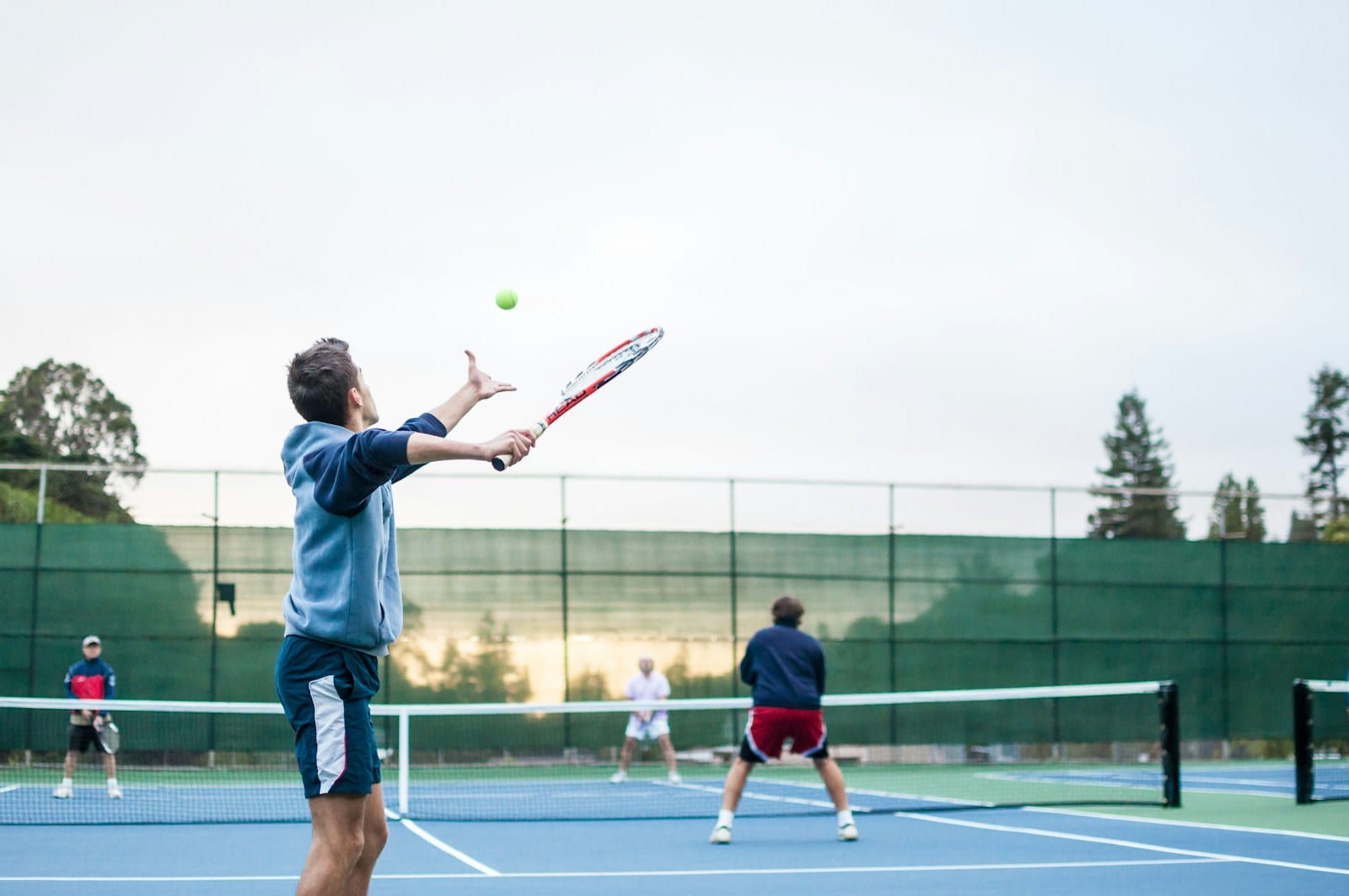
The serve starts every point you play, and it is the stroke club players practise least. Rallies get the court time, the serve gets a dozen warm-up swings before the first game, and then everyone wonders why the second serve falls apart at 4–4. It is also the easiest stroke in tennis to practise alone, because you control the ball from start to finish. All you need is a lot of balls, something to aim at and a reason to care where each one lands.
A ball machine cannot serve to you, and it does not need to. This guide shows how to build a serve session around what a rental actually gives you: a full basket of balls, a picker to collect them and a machine that keeps you hitting while your shoulder rests between serve blocks. It covers the three targets, the toss drill that fixes most faults, how to split first and second serves, and a 60-minute session you can run on your own. For the ball after the serve, pair it with our guide to singles patterns and serve-plus-one practice.
Quick answer
The best way to practise your tennis serve alone is a structured basket session: 60–100 serves in blocks of 10–15, each block aimed at one target (T, body or wide) with a set goal, and a rest or a different drill between blocks. Spend about two thirds of the serves on second serves, because that is where club players lose the most points. A ball machine cannot serve to you, but a Tennis Machine SG rental supplies the 130+ pressureless balls and ball picker a serve basket needs, and the machine fills the gaps between serve blocks with groundstroke or return work. One hour costs S$35.
Why the Serve Is the Easiest Stroke to Practise Alone
The serve is the only stroke in tennis where you create the incoming ball yourself, so it is the only one that needs no feeder, no partner and no machine. A serve basket session is simply a practice block in which you serve a large supply of balls from the baseline at chosen targets, then collect them and repeat. The limiting factor is never a hitting partner. It is the number of balls you have, because serving with three balls means walking to the net every ninety seconds.
- Volume without fatigue from chasing: you can hit 40 serves in ten minutes from a full basket, versus a handful per game in a match.
- Perfect repeatability: same court, same target, same toss, so any change in result is down to you.
- Immediate feedback: the ball either hit the target zone or it did not, and you can count it.
What You Need: Balls, Targets and a Count
Three things turn aimless serving into practice: enough balls to serve in blocks, visible targets and a written count. Every Tennis Machine SG rental includes 130+ pressureless balls, a transport cart and a ball picker, which covers the first item completely. Pressureless balls feel slightly firmer and a touch slower off the racquet than a fresh can, but they hold the same bounce all session — useful when you are judging depth and placement. Our explainer on why ball machines use pressureless balls covers the difference in more detail.

For targets, use anything that sits flat and shows up from the baseline: cones, towels, empty ball tubes or racquet covers. Place one in each of the three zones below. Then keep a count on your phone or a scrap of paper, because a serve session without numbers is just exercise.
The Three Serve Targets and What Each One Does
Every serve should be aimed at one of three targets — the T, the body or the wide corner — because each one creates a different problem for the returner. Practise all three from both the deuce and advantage sides, one target per block.
| Target | Where to place it | What it does to the returner | Block goal |
|---|---|---|---|
| T | Where the centre service line meets the service line | Shortest distance over the lowest part of the net; limits the return angle | 5 of 10 within a racquet length of the target |
| Body | In line with where the returner stands, about a metre inside the service line | Jams the swing and forces a cramped, defensive return | 6 of 10 landing in the middle third of the box |
| Wide | Near the sideline, a metre or so inside the service line | Pulls the returner off the court and opens space for the next ball | 4 of 10 within a racquet length of the sideline |
The block goals are starting points, not standards. Record your own numbers in the first session and use those as the bar to beat. Where a target sits after each serve also tells you something: a cluster long and wide usually means the toss drifted, not the swing.
Fix the Toss First
Most serve faults in club players start with an inconsistent toss, so the first five minutes of every serve session should be toss work with no swing at all. The drill is simple: take your service stance, toss to your normal height, and let the ball drop without hitting it. For a first serve it should land roughly in front of your front foot and slightly inside the baseline. Put a towel or ball tube on that spot.
- Ten tosses, count the hits on the target. Eight of ten landing within a racquet head of it means the toss is ready for the swing.
- Toss with a straight arm and open fingers. A bent elbow or a flick of the wrist is where most toss variation comes from.
- Catch the bad ones. In the serve blocks that follow, any toss that drifts gets caught and repeated, not hit. Swinging at a bad toss rehearses the compensation you are trying to remove.
First Serve vs Second Serve: Practise Them Differently
Practise the second serve more than the first. At club level, double faults and attackable second serves usually cost far more points than a lack of first-serve pace, so about two thirds of your serves should be second serves. The two serves are also practised for different things:
- First serve — placement before pace. Hit each block at 75–80% effort and chase the target, not the radar gun. A placed first serve at moderate speed wins more points than a fast one that lands in the middle of the box.
- Second serve — spin and margin. The ball should clear the net comfortably and drop in with spin, landing deep in the box. The goal is 8 of 10 in. Accelerate through the ball; a slowed-down, pushed second serve is the one that sits up to be attacked.
- Change one thing per block. Toss position, target or spin — never all three at once, or you will not know which change caused the result.
The pressure game: second serves only
Finish every serve session with ten "points" where you get one serve only — a second serve. Land it deep in the box and you win the point; miss and you lose it. Write the score down. It is the closest a solo session gets to serving at 30–40 in a match, and the number is the best single measure of whether your serve is improving week to week.
A 60-Minute Serve Session with a Ball Machine
A one-hour rental fits roughly 80–100 serves plus a machine block, with the machine work placed between serve blocks so your shoulder recovers while your legs and groundstrokes keep working. The locker's unlock button activates 30 minutes before your slot, so you can collect the machine early and have targets out before your court time starts. Remember to book the court itself separately — the rental covers the machine and equipment only.
| Minutes | Block | What to do |
|---|---|---|
| 0–8 | Warm-up and toss drill | Arm circles, trunk rotations, ten easy shadow serves, then ten toss-and-drop reps |
| 8–18 | Serve block 1: first serves | Deuce side to the T, then advantage side to the T; 75–80% effort, count the hits |
| 18–28 | Machine block: groundstrokes | Machine at the far baseline, 5–6 second feed, oscillation on; the shoulder rests while you move |
| 28–40 | Serve block 2: second serves | Alternate body and wide targets, both sides; goal 8 of 10 in, deep |
| 40–50 | Serve plus one, or returns | Serve, recover and hit the machine feed as the first ball of the rally — or swap ends for return drills |
| 50–55 | Pressure game | Ten points, one second serve each, score written down |
| 55–60 | Collect and pack up | Roll the picker along the fence line first; that is where most balls end up |
For the serve-plus-one block, set the machine about a metre inside the far baseline near the centre, feeding every 8 seconds so you have time to serve, recover and split-step. If you would rather work the other side of the serve, our return of serve drills show how to set the machine to imitate a serve coming at you. The machine features page lists the speed, spin, feed and oscillation controls you will be adjusting.
How Many Serves Is Too Many?
For most adult club players, 60–100 serves is a full session, and returning players should start at 40–50. The serve is the most demanding stroke in tennis for the shoulder, and a basket session removes the natural breaks a match provides, so it is easy to serve three times your usual volume without noticing. Build up by about ten percent a week, the same principle our guide to practising with tennis elbow applies to groundstroke volume.
This is training guidance, not medical advice. Some muscle tiredness the next day is normal after a big serve session; sharp pain during the motion, or shoulder pain that lingers after a few days of rest, is not. Stop serving and have it assessed by a doctor or physiotherapist rather than working through it. If you are coming back to tennis after a long break, our comeback plan for returning players sets out a gentler ramp.
Track Three Numbers
Track first-serve percentage, second-serve percentage and your pressure-game score, and ignore everything else. Write them down at the end of every session. Within three or four sessions you will see which serve is holding you back, and a week-by-week record is the only honest way to know whether a change to your toss or grip is working.
| Number | How to count it | What it tells you |
|---|---|---|
| First-serve % | Serves in, out of all first serves in block 1 | Whether you are trading too much margin for pace |
| Second-serve % | Serves in, out of all second serves in block 2 | Your double-fault risk under no pressure |
| Pressure score | Points won out of ten in the one-serve game | Your double-fault risk when it counts |
Book an Hour and Serve With a Purpose
A single focused hour a week on the serve does more for a club player's match results than another hour of rallying. Tennis Machine SG rents professional tennis ball machines 24/7 from a growing network of self-service smart lockers — the first is in Jurong, a short walk from ActiveSG Sport Village @ Jurong Town. An hour costs S$35 and two hours S$50, with a refundable S$200 deposit hold, and slots can be booked up to 14 days ahead, with free rescheduling up to 24 hours before your start time. See the full rental pricing for daily and weekly options.
Frequently Asked Questions
Can a tennis ball machine help you practise your serve?
A tennis ball machine cannot serve to you or return your serve, but it supports serve practice in two ways. A Tennis Machine SG rental includes 130 or more pressureless balls and a ball picker, which is exactly the equipment a solo serve basket session needs. The machine then fills the rest intervals between serve blocks with groundstroke or return work, and feeds the ball after the serve for serve-plus-one practice.
How many serves should I practise in one session?
Most adult club players can practise 60 to 100 serves in a session, split into blocks of 10 to 15 with a rest or a different drill between them. The serve is the most demanding tennis stroke for the shoulder, so players returning from a break should start nearer 40 to 50 serves and add about ten percent a week. This is training guidance, not medical advice: shoulder pain that persists after rest should be assessed by a doctor or physiotherapist.
Are pressureless balls good for serve practice?
Pressureless tennis balls are well suited to serve practice. They feel slightly firmer and come off the racquet a little slower than fresh pressurised balls, but they keep the same bounce for the whole session, so target and consistency work is not distorted by balls going flat. Tennis Machine SG rentals include 130 or more pressureless balls, enough for a full serve basket without stopping to collect after every few serves.
Should I practise my first serve or my second serve?
Club players gain the most from practising the second serve, because double faults and short, attackable second serves usually cost more points than a slow first serve does. A useful split is about one third first serves and two thirds second serves, with the second-serve goal of landing 8 out of every 10 with comfortable net clearance. The first serve is practised for placement before pace: hitting the T, body and wide targets matters more than speed.
How much does it cost to rent a ball machine for serve practice in Singapore?
Tennis Machine SG rents professional tennis ball machines from 24/7 self-service smart lockers in Singapore for S$35 for one hour or S$50 for two hours, with a refundable S$200 deposit hold applied when the session starts. Every rental includes 130 or more pressureless balls, a transport cart and a ball picker. The tennis court is not included and is booked separately with the venue, which for public courts means the ActiveSG app.
Related Reading
Stop Double-Faulting at 4–4
130+ balls, a ball picker and a machine for the gaps in between. Book an hour from a smart locker at or near your court and give your serve the practice it never gets.