Tennis Elbow: How to Keep Practising With a Ball Machine
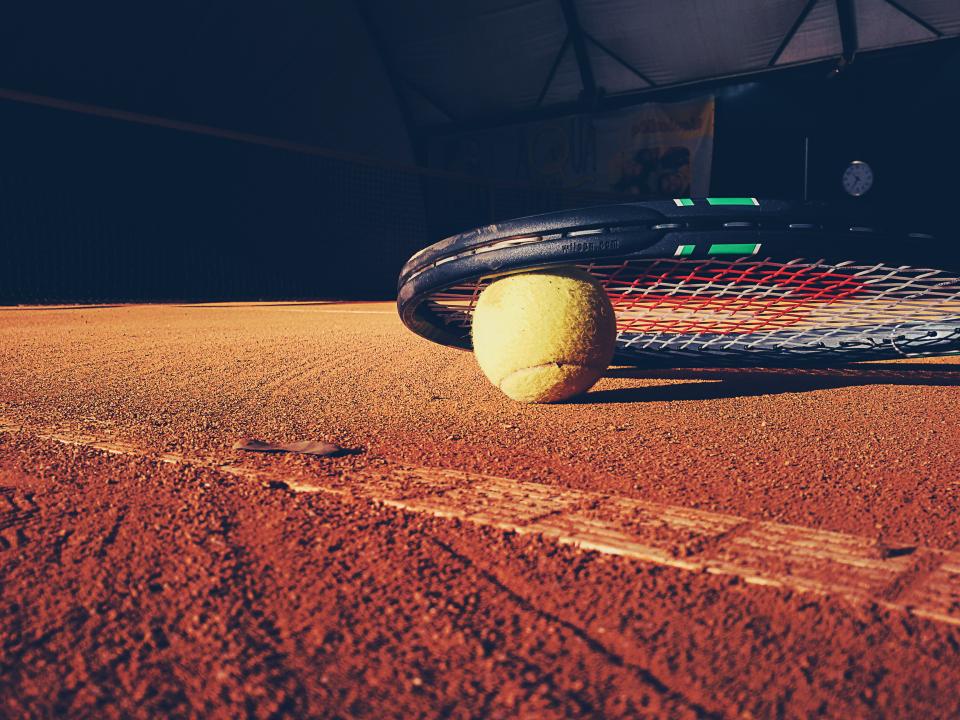
Tennis elbow ends more amateur seasons than any other injury, and it almost never arrives suddenly. It builds over weeks of slightly-too-much, and by the time the outside of your elbow hurts when you lift a kettle, the tendon has been complaining for a while. The instinctive response — stop playing entirely until it goes away — is usually both unnecessary and counterproductive, because tendons rebuild in response to controlled load, not to nothing at all.
A ball machine sits awkwardly in the middle of this. It is the best tool available for controlling exactly how many balls you hit and how hard they arrive, and it is also the easiest way to hit four hundred balls in an hour without noticing. This guide covers what actually causes tennis elbow in club players, the settings that make machine practice arm-friendly, and how to structure a session so you finish better than you started. If machine work is new to you, start with the beginner's guide to using a tennis ball machine.
Quick answer
You can keep practising with tennis elbow if you cut volume before you cut anything else. Use a slow ball machine feed of 8–10 seconds, ball speed at 40–50%, light spin, and oscillation off, then stop at 20–30 minutes of actual hitting split into short blocks. Tennis Machine SG machines adjust from 15–110 km/h, so the low end sits comfortably in a rehabilitation-friendly range. The test that matters is how the elbow feels the next morning, not how it feels during the session. Persistent elbow pain is a medical problem — have it assessed by a doctor or physiotherapist.
What Tennis Elbow Actually Is
Tennis elbow, clinically lateral epicondylitis or lateral elbow tendinopathy, is a degenerative overload injury of the common extensor tendon — the tendon anchoring your forearm's wrist-extensor muscles to the bony bump on the outside of the elbow. It is not an impact injury and it is rarely inflammation in the everyday sense. It is a tendon accumulating microscopic damage faster than it can repair it.
Two practical consequences follow from that definition:
- Total load matters more than any single shot. No one stroke gave you tennis elbow. There was a fortnight where you played more than usual, with a technique or a racquet that puts extra work through the extensors.
- Complete rest is a poor treatment. Tendons adapt to load. Full rest reduces pain and reduces tendon capacity at the same time, so the pain returns at a lower workload than before. Reduced, controlled load is the target.
This is training guidance, not medical advice. If your elbow hurts at rest, wakes you at night, or has not improved after a few weeks of reduced load, see a doctor or physiotherapist. Everything below assumes a manageable, familiar ache and a desire to keep training around it.
The Five Habits That Cause It
Almost every case of tennis elbow in a club player traces back to one or more of five things, and four of them can be changed inside a single practice session.
- A wrist-led one-handed backhand. The classic cause. If the wrist extends to meet the ball instead of the shoulder and trunk rotating through it, the extensor tendon absorbs the impact. This is the highest-value technical fix available.
- Late contact. A ball struck behind the body forces the arm to brace against a shock it is not aligned to absorb. Late contact is a footwork problem far more often than an arm problem — see our footwork drills with a ball machine.
- A grip that is too small. An undersized grip makes you squeeze harder to stop the racquet twisting on off-centre hits, and sustained squeezing is exactly the load that irritates the extensors.
- Stiff racquet, high tension and full polyester together. Each one alone is survivable. All three at once transmit a great deal of shock into the forearm on every ball.
- A sudden jump in volume. Two sessions a week becoming five, or one hour becoming three, with no ramp. Tendons adapt slowly, and this is what catches returning players hardest.
Arm-Friendly Ball Machine Settings
The arm-friendly configuration is slow feed, moderate speed, light spin and no oscillation. Every one of those choices exists to make sure the ball arrives somewhere you can hit it cleanly, on time, in front of your body. The ball you have to reach for, rush, or dig out late is the expensive one.
| Setting | Arm-friendly value | Why |
|---|---|---|
| Feed rate | 8–10 seconds | Gives you time to set up in front of the ball, and caps a block at roughly 40 balls instead of 120. |
| Ball speed | 40–50%, roughly 45–60 km/h | Lower incoming pace means lower impact shock at contact, and you still get a full swing. |
| Spin | Light topspin or flat | Heavy topspin kicks up high, pushing contact above the comfortable strike zone and inviting a wristy swat. |
| Oscillation | Off | A fixed target lets you rehearse the same clean contact repeatedly. Add width back only once the elbow is quiet. |
| Bounce height | Waist-high | The strike zone where the shoulder and trunk do the work and the wrist does the least. |
Set the feed rate before you start hitting
Machine practice quietly triples your repetition count compared with a rally. That is exactly why it grooves a stroke so well, and exactly why it is dangerous for a sore tendon. Decide your feed rate and your block length before the first ball, not after your arm starts complaining.
A 45-Minute Arm-Friendly Session
Structure the hour so that hitting is a minority of it. The following fits inside a one-hour rental and totals about 25 minutes of ball contact.
- Minutes 0–8, warm-up. Easy jogging, arm circles, wrist flexion and extension holds, then twenty shadow swings. Warm tendons tolerate load better than cold ones.
- Block 1, 6 minutes. Forehand only, feed at 10 seconds, speed 40%. Focus entirely on meeting the ball in front. Rest 4 minutes.
- Block 2, 6 minutes. Backhand, same settings. If you play one-handed and it hurts, use a two-handed backhand for this block — the second hand takes load off the lead forearm.
- Rest 5 minutes. Sit down, drink, and assess the elbow honestly. If it is louder than when you started, stop here.
- Block 3, 6 minutes. Alternating sides at a slightly quicker 8-second feed. This is the block you drop first on a bad day.
- Minutes 40–45, cool-down. Gentle wrist extensor stretch with the arm held straight, three holds of 30 seconds.
Twenty-five minutes of hitting sounds thin. At this feed rate it is roughly 150 balls, which is more quality forehands than most players hit in a two-hour social session, and every one of them is deliberate.

Fix the Equipment Before You Fix the Swing
Equipment changes are faster and more reliable than technique changes, so make them first. Three adjustments do most of the work:
- Drop string tension by 2–3 kg. A looser bed deforms more and transmits less shock. It is the cheapest change available and you will feel it on the first ball.
- Move off full polyester. A multifilament string, or a hybrid with multifilament in the crosses, is markedly softer on the arm than a full polyester bed at the same tension.
- Check your grip size. Holding your normal forehand grip, you should be able to slot the index finger of your other hand into the gap between fingertips and palm. No gap means the grip is too small, and an overgrip adds roughly half a size.
Once the equipment is sensible, the technique work has a target: contact in front, shoulder and trunk rotating through the ball, wrist quiet. A machine is the ideal place to rehearse that, because the ball arrives in the same spot every time and you can spend all of your attention on the arm. The same principle drives our backhand drills guide, and you can review the full machine features and settings before booking.
Off-Court Work That Actually Helps
Loading the tendon deliberately, away from the court, is the intervention with the strongest evidence behind it. Eccentric wrist extension is the standard exercise: rest your forearm on your thigh, palm facing down, with a light weight in your hand; use the other hand to lift the weight up, then lower it slowly over three to four seconds under the working arm's own control. Three sets of fifteen, most days, starting with a weight light enough to feel almost trivial.
Grip and shoulder strength matter too, because a stronger shoulder and trunk means the forearm is asked to do less on every ball. That connects directly to broader physical preparation — our guide to off-court conditioning for tennis players in Singapore covers where this fits in a training week.
Knowing When to Stop
Use the 24-hour rule: mild discomfort during a session that settles by the next morning is acceptable, and pain that is worse the following day means the last session was too much. Track it honestly for a fortnight and you will find your current ceiling, then add roughly ten percent a week. Renting by the hour makes that ramp easy to manage — you are not committed to filling an afternoon, and at S$35 for one hour or S$50 for two, a short deliberate session costs less than a long careless one. See the full rental pricing for hourly, daily and weekly options. And if the pain is not improving, stop guessing and get it looked at.
Frequently Asked Questions
Can I use a tennis ball machine if I have tennis elbow?
A tennis ball machine can be used with tennis elbow, and it is often gentler on the arm than live hitting because the feed rate is adjustable. Set a slow feed of 8 to 10 seconds, a ball speed of 40 to 50 percent, and cap the session at about 30 minutes of hitting. The risk with a machine is the mirror image of its benefit: an unchanged feed rate makes it easy to hit three times your normal number of balls without noticing. Tennis elbow is a medical condition, so persistent pain should be assessed by a doctor or physiotherapist rather than self-managed.
What is tennis elbow?
Tennis elbow, clinically called lateral epicondylitis or lateral elbow tendinopathy, is a degenerative overload injury of the common extensor tendon where the forearm muscles attach to the bony bump on the outside of the elbow. It shows up as pain on the outside of the elbow that worsens when gripping, lifting with the palm down, or hitting a backhand. Despite the name, most cases are caused by cumulative load rather than by any single stroke.
What ball machine settings are easiest on the arm?
The arm-friendly configuration on a tennis ball machine is a slow feed rate of 8 to 10 seconds between balls, a ball speed of 40 to 50 percent, light topspin or none, and oscillation switched off so the ball arrives in the same strike zone every time. Tennis Machine SG machines adjust from 15 to 110 km/h, so the low end of that range sits comfortably in a rehabilitation-friendly window. Balls taken late, off-centre or on the stretch load the tendon hardest, and each of those settings exists to reduce how often that happens.
Do pressureless balls make tennis elbow worse?
Pressureless balls feel heavier off the string bed than fresh pressurised balls, but they do not go dead over the course of a session, and it is dead balls that push players into swinging harder. Every Tennis Machine SG rental includes 130 or more pressureless balls that hold the same bounce for the whole hour, which removes the creeping increase in effort that happens as a can of pressurised balls goes flat. Consistent ball behaviour is what matters most for an irritated tendon.
How long should a practice session be with a sore elbow?
Keep total hitting to 20 to 30 minutes when an elbow is sore, split into blocks of 5 to 8 minutes with a genuine rest between them. Tennis Machine SG rents by the hour at S$35, which covers a short hitting block plus warm-up, rest and cool-down with no pressure to fill the time. The rule that decides everything is next-morning pain: if the elbow is worse 24 hours later, the last session was too long.
Where can I rent a tennis ball machine in Singapore?
Tennis Machine SG rents professional-grade tennis ball machines from 24/7 self-service smart lockers, currently at 166 Yung Kuang Road, #01-01, Singapore 611166, a short walk from the courts at ActiveSG Sport Village @ Jurong Town. Rentals are S$35 for one hour and S$50 for two hours with a refundable S$200 deposit hold, and can be booked up to 14 days in advance or unlocked on the spot by scanning the QR code on the locker.
Related Reading
Train Smart, Not Sore
Book an hour, set a slow feed, and hit 150 deliberate balls instead of 400 rushed ones. Machines unlock 24/7 from our court-side smart lockers.